
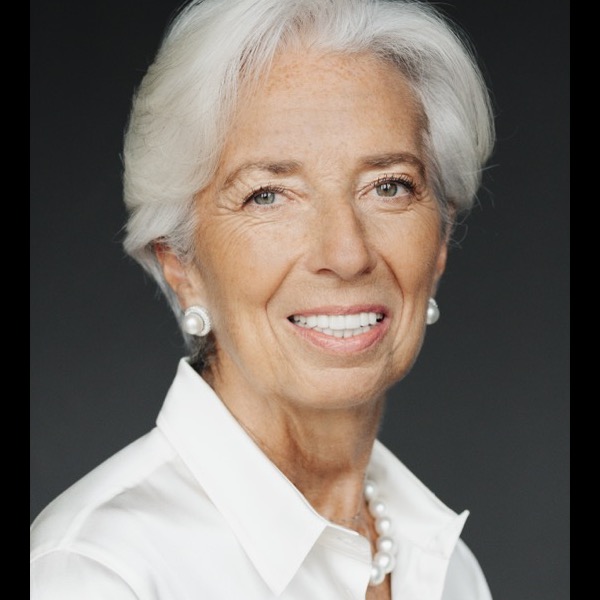

Lagarde holds the line on euro stablecoins. Berlin, Paris and the market already crossed it.
One interview. The third NCB voice to break with Lagarde in three months.
Read in isolation, this is a disagreement between two officials. Read against the prior six months of public statements from the Bundesbank and Frankfurt, it is the moment Lagarde's position stopped being the consensus.
A speech, an interview, a consortium, and a settlement rail.
The Beau interview is the news event. Qivalis and Pontes are the rails the interview is about. Lagarde's speech four days earlier is the position Beau just publicly contradicted.
Three rails for the euro on-chain. Lagarde wants two of them.
There are three architecturally distinct ways to put the euro on a public or permissioned ledger. They share the same denomination and very similar wallet UX. The legal and prudential treatment underneath is not the same.
Lagarde's read is that rails one and two suffice, and rail three creates monetary policy and run-risk problems that outweigh its convenience. Beau's read is that rail three exists already in dollar form, is being built in euro form, and the only choice is whether Europe regulates it well or watches it happen on its periphery. The disagreement is real, but it is no longer where the institutional weight sits.
Lagarde says no. She is the only senior figure who does.
The Beau interview is the third public NCB-level break with Lagarde in three months. On 16 February, Bundesbank President Joachim Nagel, speaking at the AmCham Germany New Year's Reception, said he "sees merit in euro-denominated stablecoins" for cross-border payments and as a counter to dollar substitution. Through the spring, Banque de France Governor François Villeroy de Galhau has repeatedly warned that European banks risk falling behind US stablecoin development. ECB Executive Board member Piero Cipollone, in his 4 May Rome speech, pressed for an accelerated tokenization roadmap and treated private rails as part of the architecture. Beau's CoinDesk interview ratifies the Banque de France line at two levels.
The structure of the disagreement is asymmetric. Lagarde chairs the Governing Council and controls the messaging out of Frankfurt. What she does not have is the support of the two largest national central banks in the Eurosystem, both of which have now publicly endorsed exactly the kind of private euro stablecoin she opposes. The Bundesbank and the Banque de France together account for the bulk of the system's balance sheet and most of its monetary-policy intellectual weight. When both of them break in public on the same question, the institutional center has already moved; the speeches from Frankfurt are catching up to a decision the system is making elsewhere.
The biggest euro stablecoin in 2026 is issued by a US company.
The total euro stablecoin market sits at roughly $887M in market cap as of Q1 2026. Circle's EURC, issued from the United States, holds 41 to 50 percent of that float. SG-FORGE's EURCV, Monerium's EURE, and Quantoz's EURQ make up most of the remainder. The market grew 1,200 percent under MiCA in twelve months. The growth is real. The composition is the problem: the dominant euro stablecoin today is not European, and it is the one that European corporate treasuries default to when they want on-chain euro liquidity.
Set that against the total stablecoin float of $310B, 98 percent of which is USD-pegged. European treasurers and fintechs that need on-chain settlement either accept a US-issued euro token or use a US-issued dollar token. Pontes, when it launches in September, will not change that calculus. It is wholesale only, accessible to TARGET participants, and is not a treasury or retail instrument. The retail digital euro is a 2029 instrument at the earliest, contingent on Council and Parliament approval. The gap between today and a Eurosystem-issued on-chain euro that a corporate treasurer can actually use is three years.
Lagarde's run-risk concerns are not wrong on principle. The USDC depeg of March 2023 was real. Bank-deposit substitution into stablecoins is a real constraint in a bank-based system. MiCA's EMT regime is untested at scale. Where she is wrong is on the policy implication. Pretending the on-chain euro lane will hold for three years while the Eurosystem completes its preferred architecture is a bet that the market will sit still. The market is not sitting still: Circle is already there, Qivalis is filing, and the Bundesbank and the Banque de France have already said yes in public.
Beau wins by default. Lagarde's concerns survive; her policy line does not.
The euro on-chain has three possible rails. Lagarde would prefer two. The Bundesbank, the Banque de France, and the market are already proceeding on the assumption of three. Qivalis will receive EMI authorization in the next six months or it will not, but neither outcome reverses the institutional drift: the next Eurosystem strategic line on stablecoins will be set by the bloc that includes Berlin and Paris, not by the speeches given from Frankfurt. The right reading of the Beau interview is not that the ECB is split. It is that the ECB president is now the holdout. The real fight is no longer policy. It is product, and it is between Qivalis and Circle.
Watch three things over the next six months:
- DNB authorization timing for Qivalis. Tells you whether the regulator-by-default reads Berlin and Paris or Frankfurt.
- Qivalis float versus EURC after launch. Tells you whether a bank-backed euro stablecoin can outcompete an already-installed US-issued one on a level MiCA playing field.
- Lagarde's next major intervention. Tells you whether the ECB president retreats to "regulate it well" or doubles down on opposition. The first is graceful; the second is increasingly costly.
Common questions on the euro stablecoin and the ECB split.
Who in the Eurosystem actually supports euro stablecoins?
What is the biggest euro stablecoin in 2026?
What is Qivalis?
Why does Pontes not solve the euro stablecoin problem?
What does Lagarde get right, and what does she get wrong?
How does this connect to the US GENIUS Act?
Related briefings on the same rails.

At the Nicosia informal ECOFIN on 22 May, the ECB rejected all three Bruegel proposals that could have made euro stablecoin issuance commercially viable: lowering…
Read briefing
On the second anniversary of its own MiCA authorization, Circle disclosed that only 3 of the world's top 50 stablecoins are MiCA-compliant, and publicly pushed the…
Read briefingSeven axes where the two paths diverge: issuer license, backing, regulation, insurance, network, yield, and example issuers.
Read briefing
Zerohash Europe received an EMI license from DNB on 18 May 2026, the first firm licensed under MiCAR to also hold full EMI status.
Read briefing37 banks across 15 EU countries back Qivalis ahead of a second-half 2026 launch, with a DNB e-money licence still pending and Fireblocks as the infrastructure layer.
Read briefing
The Bank of England drops the £20,000 individual stablecoin holding limit in favour of aggregate issuance caps on providers, sets June 2026 for draft rules and…
Read briefingSuggest a news item or request a private briefing.
Public briefings publish on no fixed cadence. Private briefings, written for one institution and one decision, are part of the consulting engagement formats.
Book a discovery call