The Strategy & Architecture partner for digital assets and AI.

tracee advises banks, multilateral funds, and digital asset platforms on the design and deployment of the tokenized economy, compliant stablecoins, payment and settlement rails, and agentic financial workflows.

Awards and recognition.

Award

Circle Impact Award.

Winner of the Circle Impact Award for architecting a bulk-payment system that delivers funds to refugees and enables secure collection through SMS codes and MoneyGram access.

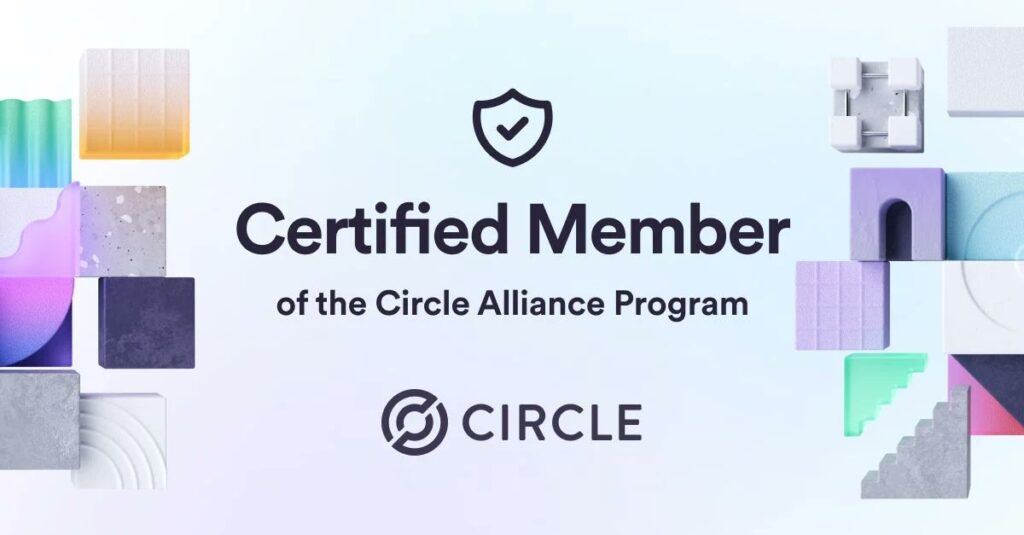
tracee, Certified Member of the Circle Alliance Program
Circle Alliance Program

tracee is a Certified Member of the Circle Alliance Program, Circle's curated partner network for institutional builders deploying USDC and EURC payment, treasury, and settlement infrastructure.

View tracee on the Circle partner directory
Patent

AI patent, imminent approval.

Patent in advanced review stage, covering a multi-agent AI architecture for digital-payment platforms. Designed to automate transaction flows, enhance security, and deliver contextual, intelligent payment execution.

Trusted by teams across fintech and payments

What we work on.

Four practice areas where we hold the deepest tools and the longest mileage. Each engagement draws on whichever combination the decision requires.

01 / Practice

Product strategy.

Translate regulatory posture into a product brief, a target architecture, and a roadmap engineering and risk can ship.

  • Define the product brief, scope, and target architecture.
  • Map institutional and operational user journeys.
  • Translate regulatory posture into product constraints.
  • Compliance scoping: KYC, AML, CFT, Travel Rule, GDPR.
  • Deliver executable roadmaps for engineering and risk.
02 / Practice

Stablecoin infrastructure.

Reserves, settlement, custody, oracles, and bank-rail integration. Designed against MiCA, NYDFS, and MAS.

  • Design settlement flows, redemption windows, and reserve composition.
  • Architect MiCA, NYDFS, and MAS-compliant issuance models.
  • Select chains, custody patterns, and oracle architecture.
  • Integrate with bank rails and treasury operations.
  • Define operational liquidity and capital buffers.
03 / Practice

Tokenized products.

Tokenized deposits, money-market funds, and real-world assets, engineered for institutional issuance and distribution.

  • Tokenized deposits, money market funds, short-dated debt.
  • Real-world asset frameworks for institutional issuers.
  • Subscription, redemption, and corporate-action mechanics.
  • Distribution architecture across regulated venues.
  • Secondary-market design and tokenholder reporting.
04 / Practice

Agentic AI workflows.

Treasury, KYC, and exposure workflows shipped from pilot to production with the guardrails regulators expect.

  • Identify deploy-ready use cases across finance functions.
  • Design human-in-the-loop oversight for agentic systems.
  • Treasury reconciliation, KYC review, exposure monitoring.
  • Define guardrails, escalation paths, and audit trails.
  • Stage rollouts from pilot to production safely.

How an engagement runs.

01
Discovery call.
Thirty minutes, no charge.
02
Scoping document.
Within one week of the call.
03
Engagement proposal.
Scope, deliverables, and timeline, defined up front.
04
Weekly working sessions.
With your decision-makers in the room.
05
Decision-grade deliverables.
Documents your board can act on.
Recent reading

Latest briefings.

Explore all briefings
Regulation · GENIUS Act / 20 July 2026 / 6 min
The GENIUS Act's one-year rulemaking deadline came and went: five federal regulators still have proposals, not rules, and the compliance clock never stopped.

Section 20's effective date, the earlier of 18 January 2027 or 120 days after final rules issue, is untouched by the miss. Two of the five comment periods do not close until August, leaving roughly nine weeks for the early-trigger path to still matter before the statutory backstop takes over.

Read briefing
Stablecoin Infrastructure · Visa / 17 July 2026 / 6 min
Visa launches the Visa Stablecoin Platform: the rail goes neutral, and the currency it is built to carry does not exist yet.

Open USD is not yet live; Open Standard has said its native Solana launch comes later in 2026. Circle shares fell roughly 5% on the news anyway, compounding a roughly 15% drop after Open Standard's June 30 launch, and Mizuho downgraded Circle to Underperform on July 14 citing the reserve-income threat directly.

Read briefing
Tokenization · Japan / 14 July 2026 / 6 min
SBI Holdings and Solana Foundation launch SBI Solana Global: Japan gets a third chain in its stablecoin stack, and SBI's own yen token was headed somewhere else first.

JPYSC's own issuer and co-developer had already committed the token to Startale's Strium L1 in June, and Progmat already moved more than ¥439.6B in tokenized assets onto Avalanche the same month. The megabank consortium's October 2026 blockchain decision now has three Japanese chain bets to weigh instead of one.

Read briefing
Stablecoin Infrastructure · Circle / 11 July 2026 / 6 min
Circle's OCC trust bank charter clears final approval: the new bank custodies USDC's own reserves in place of third parties, and does nothing yet to blunt the rival stablecoin racing to undercut its fees.

The new bank custodies digital assets for Circle and its own affiliates under direct federal supervision. USDC reserve management stays with BNY Mellon and is described only as a planned future capability. The charter does nothing to answer Open USD, the fee-free, yield-sharing stablecoin backed by Stripe, Visa, and 140-plus firms.

Read briefing
Settlement Infrastructure · SWIFT / 10 July 2026 / 7 min
SWIFT's blockchain ledger goes live with 17 banks across six continents: the messaging network adds a 24/7 tokenized deposit overlay, and final settlement still clears through the correspondent rails underneath it.

The ledger moves tokenized deposits 24/7, including weekends and overnight, on a permissioned Linea-style network with Chainlink CCIP as its interoperability layer. Final settlement still clears through SWIFT's existing correspondent rails, and no live transaction has been disclosed.

Read briefing
Stablecoin Infrastructure · Ripple / 09 July 2026 / 7 min
Ripple completes the Luxembourg license pair Bridge just started: CASP and EMI now cover 30 EEA states, and Ripple's own stablecoin still can't launch under it.

tracee's July 7 Bridge briefing flagged whether Circle, Ripple, or Paxos would pursue the same CASP-plus-EMI structure in Luxembourg. Four days later Ripple did, building the pair sequentially over six months rather than in one filing. RLUSD, Ripple's $1.7B stablecoin, is still absent from ESMA's e-money token register, so it cannot yet trade on regulated EU venues.

Read briefing
Frequently asked

Common questions about tracee

What does tracee do?
tracee advises banks, multilateral funds, and digital asset platforms on the design and deployment of the tokenized economy, compliant stablecoins, payment and settlement rails, and agentic financial workflows.
Where is tracee based?
tracee is based in Paris, France, and operates as Tracee SAS, a registered French company. Engagements are delivered globally.
Who founded tracee?
tracee was founded by Bassel Assaad, an engineer and inventor with 29 patents across five jurisdictions and a PhD in IT and systems from Sorbonne Universités. He is a UN advisor, and a senior expert in digital assets and AI in finance.
What kind of consulting does tracee offer?
tracee offers four engagement formats. Milestone-based mandates deliver strategic architecture and execution oversight on a fixed-scope basis. Embedded engagement places senior expertise inside the team on a daily-rate, continuing basis. Advisory provides an independent read on trajectory through recurring weekly, biweekly or monthly sessions with written debriefs. Executive workshop is a private session scoped to the work.
What topics does tracee specialise in?
Four practice areas: stablecoin infrastructure (settlement flows, MiCA / NYDFS / MAS issuance, custody, oracles), tokenized products (deposits, money market funds, real-world assets), agentic AI workflows (treasury reconciliation, KYC review, exposure monitoring), and product strategy (KYC, AML, CFT, Travel Rule, GDPR compliance, executable roadmaps for engineering and risk).
Who are tracee's clients?
tracee advises banks, multilateral funds, digital asset platforms, and fintech CFOs. Current mandates include a UN multilateral climate fund (digital payment and AI infrastructure across six Central African countries) and a digital asset platform with a South African footprint.
How do I work with tracee?
The first step is a 30-minute discovery call, free and without obligation. Book a call or email hello@traceeapp.com.
Does tracee publish research?
Yes. tracee publishes long-form reports on the architecture of the tokenized economy. Recent publications include Stablecoin architecture for regulated issuers, A board-ready assessment framework for the tokenized economy, and Multi-rail payments for emerging market disbursement. Browse reports.

Start with a conversation.

Thirty minutes, no slide deck, no obligation. We listen, we assess fit, and we tell you whether we can help.